
You might not realize that basements can often be the most neglected areas in a home when it comes to moisture management. Without proper attention, they can become breeding grounds for mold and mildew, affecting your home's overall air quality and structure. Fortunately, there are practical strategies you can implement to keep your basement dry year-round. By understanding these six genius hacks, you can take proactive measures that not only protect your investment but also enhance your living space. Curious about what these solutions entail?
Seal Your Foundation Walls

When you want to keep your basement dry, sealing your foundation walls is essential.
Start with a thorough foundation inspection to identify cracks and holes. Clean the walls completely, removing dirt, dust, and old coatings.
Once the surface is bare, fill any significant cracks with hydraulic cement, ensuring a watertight bond. After the cement sets, apply waterproof coatings using a high-quality paint or sealer designed to withstand hydrostatic pressure. Interior drainage solutions can also be considered to further enhance the waterproofing efforts.
Use a nylon bristle brush or a roller to massage it into the masonry's pores, applying at least two coats for proper coverage.
Install a Sump Pump
To effectively manage water accumulation in your basement, installing a sump pump is a smart solution. Start by identifying the lowest point where water gathers and make certain it's near a GFCI outlet. Dig a hole for the sump basin, making sure it's flush with the floor. After placing the basin, backfill the perimeter with dirt and add landscape fabric to prevent clogs. Install the sump pump, making certain it's level and free for the float switch to operate. Connecting the discharge pipe is crucial, as it helps to move water away from the foundation and prevent flooding. Seal any holes with waterproof caulk. Finally, test the pump for proper operation. Don't forget regular sump pump maintenance to keep it functioning efficiently and prevent future water issues.
Use Dehumidifiers Effectively
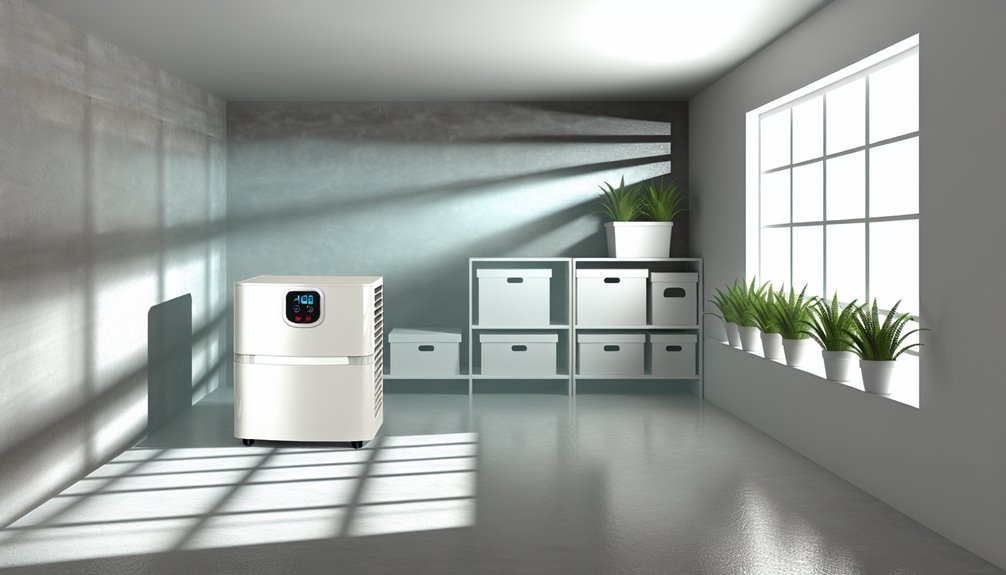
Using a dehumidifier effectively can markedly reduce moisture levels in your basement, creating a healthier environment.
Start by selecting a compressor dehumidifier with a capacity to remove up to 70 pints of water daily, suited for your basement's humidity. Set your dehumidifier settings to maintain relative humidity between 40% and 50% for peak results.
Position it centrally, ensuring it's at least 6-12 inches away from walls for proper airflow. For energy efficiency, choose an Energy Star certified model and consider automatic drainage options to minimize maintenance.
Regularly check performance and use a hygrometer to monitor humidity levels, adjusting as necessary for seasonal changes. These steps will enhance your basement's comfort and air quality.
Improve Drainage Systems
Effective drainage systems are essential for keeping your basement dry and preventing water damage.
Start by installing French drains around your home's perimeter to redirect water away from the foundation. Make certain your landscape slopes away from your house to avoid water pooling near the foundation.
Keep gutters and downspouts clear, directing water at least 10 feet away. For added protection, apply waterproof coatings on your foundation walls to combat water infiltration.
Inside, consider placing perforated pipes along the basement floor to channel water to a sump pump. Regularly inspect and maintain your drainage solutions to keep them clear of debris.
Ventilate Your Basement

Ventilating your basement is essential for maintaining a dry and healthy space. By implementing effective ventilation strategies, you can promote natural airflow and reduce moisture.
Here are some key approaches:
- Install exhaust fans to expel stale air while introducing fresh air through intake vents.
- Utilize cross-ventilation by opening doors to upper levels and placing fans strategically.
- Consider basement windows that allow natural light and airflow.
These methods not only combat dampness but also create a more inviting environment.
Remember, maintaining proper airflow can help prevent mold growth and improve air quality.
With a little effort, you can guarantee your basement stays dry and comfortable all year round, benefiting both you and your loved ones.
Regular Maintenance Checks
While it may seem easy to overlook, regular maintenance checks are essential for keeping your basement dry and preventing costly repairs. Schedule seasonal inspections to identify potential issues early.
Start by checking window and door seals for cracks and replacing worn weatherstripping. Inspect insulation around pipes and walls, ensuring it's intact and dry. A hygrometer can help you monitor humidity levels; aim for 30% to 50%.
Don't forget plumbing maintenance—test your sump pump and clear any blockages in the discharge line. Keep your basement clean and organized to spot water damage or pests easily.
Conclusion
By implementing these six genius hacks, you can considerably reduce the risk of moisture in your basement. Did you know that nearly 60% of homes have experienced some form of water damage? By sealing your foundation walls, installing a sump pump, and maintaining proper ventilation, you can protect your home and belongings from costly repairs. Regular maintenance checks guarantee you stay one step ahead of potential issues, keeping your basement dry and your peace of mind intact all year round.
If you'd like to learn more about keeping your basement dry or need assistance with moisture control, I invite you to visit Eco Pro Restoration at ecoprorestoration.com. You can also give them a call at (410) 645-0274. Their friendly team is ready to help you find the best solutions for your home!