
When it comes to protecting your basement from rain damage, knowing where to start can be overwhelming. You might already suspect your home has vulnerabilities, but pinpointing the exact risks is essential. By evaluating factors like topography and drainage, you can take effective steps to safeguard your space. From improving your drainage systems to sealing cracks, there are practical solutions to contemplate. But what about those less obvious areas that often go overlooked? Understanding these can make all the difference in flood-proofing your home effectively.
Assessing Your Basement Vulnerability

When you assess your basement vulnerability, it's crucial to take into account both the topography of your property and its proximity to water bodies.
Low-lying areas are especially susceptible to flooding, so you'll want to check digital elevation models and floodplain maps to identify any risks.
Investigate your location's flood history—areas prone to past flooding are likely to face future events.
Additionally, consider the soil composition on your property; urbanization and changes in land use can affect water absorption and runoff.
By understanding these factors, you can make informed decisions to help protect your home. Comprehensive assessments are vital for understanding property vulnerability and can guide your flood-proofing efforts.
Regular assessments and proactive measures won't only safeguard your basement but also serve your community by promoting better environmental practices.
Improving Drainage Systems
Improving your home's drainage systems is essential for preventing water damage and flooding, especially during heavy rainfall.
By focusing on gutter maintenance and drainage landscaping, you can greatly enhance your home's protection against water intrusion.
Here are three practical steps to contemplate:
- Clean gutters and downspouts regularly to prevent clogs and guarantee smooth water flow.
- Install a French drain to divert water away from your home, protecting your foundation. This system can effectively collect and redirect water away, preventing standing water.
- Grade your yard to direct water away from the foundation, minimizing the risk of pooling.
These strategies not only safeguard your home but also enhance your landscape's functionality.
Taking these measures will help you serve your home and community better by preventing potential water damage.
Sealing Cracks and Gaps

Although water may seem harmless, even small cracks and gaps in your home can lead to significant problems over time.
Start with crack identification; look for shrinkage, bulging, and settlement cracks in walls, floors, and around openings. Addressing these issues early is vital.
For sealing techniques, consider using waterproofing compounds like urethane or epoxy for varying severity. Drill holes for injecting epoxy in larger cracks, or apply waterproof membranes to basement walls to keep water out.
Don't forget to seal gaps around pipes and windows to prevent leaks. Regularly inspecting and maintaining these areas not only protects your home but also serves your community by spreading awareness about flood-proofing methods.
Taking action now can save you headaches later.
Installing a Sump Pump
After sealing cracks and gaps in your home, the next step to flood-proofing your space is installing a sump pump. This vital device helps manage water accumulation and protects your basement.
Here's how to get started:
- Choose the Right Location: Find the lowest point in your basement or crawl space for your sump pit. Make sure it's near a GFCI outlet.
- Prepare the Site: Mark the area, break through the concrete, and dig a hole for the sump basin.
- Install and Test: Place the pump in the basin, connect the discharge pipe, and seal it. Don't forget to test it by filling the basin with water.
Regular sump pump maintenance guarantees it runs smoothly, safeguarding your home against flooding.
Utilizing Waterproofing Products

Waterproofing your home is essential in preventing damage from flooding and moisture buildup. Start by utilizing waterproofing membranes on the exterior, like the 650 Membrane or Blindside Membrane, designed to protect your basement walls from groundwater and contaminants.
These membranes can be applied vertically or horizontally, ensuring a tight seal with components like dimple drainage boards and Liquid Waterproofing.
For interior systems, consider DIY waterproofing kits such as SealOnce or SANI-TRED. These systems effectively seal leaks at the junction of walls and floors, protecting against moisture in various conditions.
Elevating Appliances and Storage
One effective way to protect your home from flood damage is by elevating your appliances and storage. This simple yet crucial step enhances flood resistance and safeguards your belongings.
Here are three practical tips to get started:
- Use sturdy platforms or shelves: Elevate appliances on flood damage-resistant materials, ensuring they're securely attached above the design flood elevation.
- Relocate outdoor units: Move air conditioning units or generators to elevated platforms to prevent water damage.
- Store items wisely: If possible, keep smaller appliances in higher areas of your home or a separate storage building situated above flood levels.
Regular Maintenance and Inspections
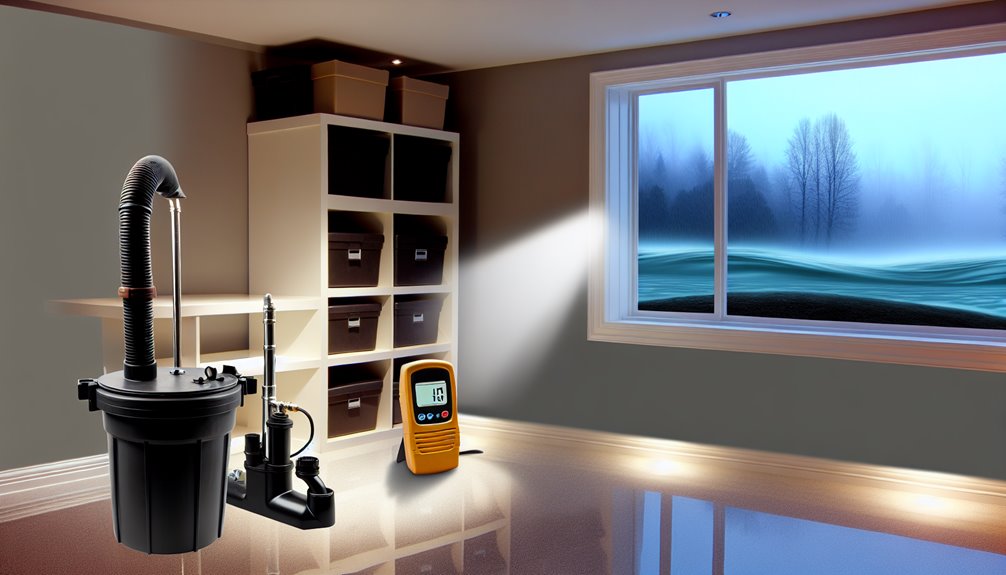
To keep your home safe from potential flood damage, regular maintenance and inspections are key.
Start with gutter maintenance by cleaning them at least twice a year to remove debris and checking for cracks that could hinder performance. Make sure downspouts extend several feet away from your foundation to direct water away effectively.
Next, schedule foundation inspections to identify cracks or signs of wear. Seal any found openings with a high-quality waterproofing compound to prevent water seepage.
Don't forget to inspect your sump pump and drainage systems regularly, making certain they're functioning properly.
Conclusion
By taking these steps, you can transform your basement from a potential swimming pool into a dry haven. Remember, a little preparation goes a long way—like planting seeds for a bountiful garden. Regular maintenance and vigilance will keep water at bay, ensuring your home stays safe and sound. Don't wait for the storm; act now to flood-proof your space and protect your belongings from the rain's relentless grip. Your basement will thank you!
If you're looking for more tips or need professional help, I invite you to visit Eco Pro Restoration at ecoprorestoration.com or give them a call at (410) 645-0274. They have a wealth of resources and expertise to guide you in keeping your basement dry and secure. Don't hesitate to reach out; your peace of mind is just a click or call away!