
After a burst pipe soaked your basement slab, you act within hours: extract standing water, map damp zones with a moisture meter, and set up LGR dehumidifiers with HEPA scrubbers. You isolate the area, tent and elevate salvageable items, and discard contaminated cellulose. You target 40–50% RH using balanced ventilation, seal leaks, and choose mold‑resistant materials and plant‑based enzyme cleaners. You track progress daily—because the next 48 hours determine whether spores stay dormant or take over.
Act Fast: The First 24–48 Hours
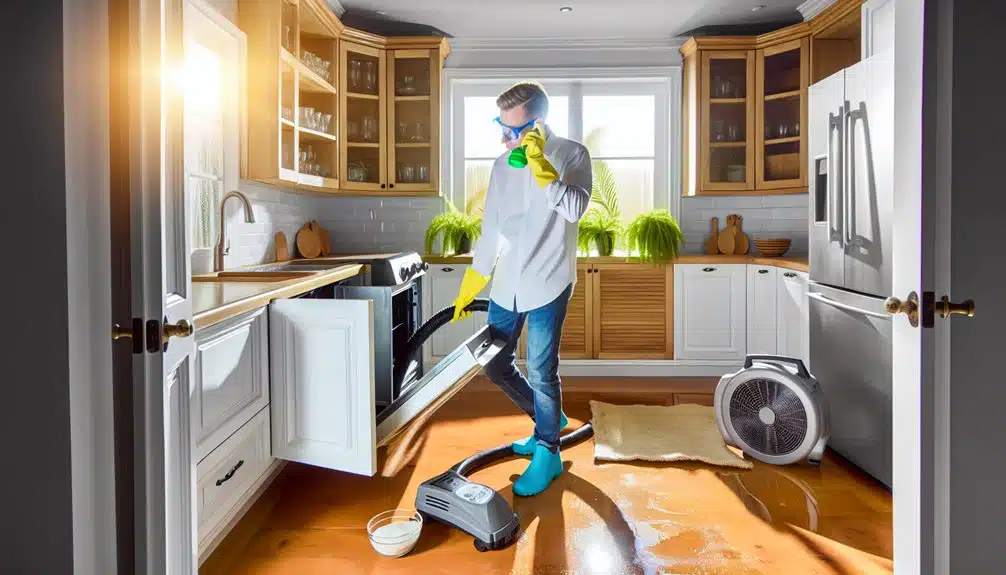
Move quickly—mold can start growing within 24 hours. Begin with a rapid assessment: identify all wet materials, map moisture migration with a meter, and document sources. Shut off electricity to affected zones if panels or outlets are compromised. Wear nitrile gloves, goggles, and a respirator (at least N95). Isolate the area with a containment setup: plastic sheeting, taped seams, zipper access, and floor protection. Remove standing water using a wet vac with HEPA exhaust. Prioritize salvageable, low-porosity items; bag unsalvageable cellulose. Elevate rugs and furniture on blocks. Use eco-certified cleaners for surface decontamination. Coordinate with neighbors, sharing resources and checklists.
Ventilation and Humidity Control Without Wasting Energy
Often the most effective mold prevention is precise airflow and moisture control that doesn’t waste energy. Start by setting indoor relative humidity to 40–50% and verify with smart monitors in rooms impacted by water. Use balanced ventilation with heat recovery to exhaust damp air while reclaiming warmth, reducing load on your HVAC. Seal duct leaks and maintain MERV 8–13 filtration to capture spores. Program bathroom and laundry fans to run on humidity setpoints, not guesswork. Keep interior doors open to equalize pressure. Avoid overventilating in cold or humid weather; let data guide you. Document readings so everyone stays aligned and safe.
Low-Impact Drying Techniques and Tools

Dial in low-impact drying by removing moisture at its source while protecting materials and minimizing energy use. Start by extracting standing water, then map damp zones with a moisture meter. Prioritize wall cavities, subfloors, and insulation using controlled airflow and temperature. Choose desiccant drying for cool climates or dense assemblies; deploy LGR dehumidifiers for warm rooms. Direct air movers to create crossflow without blasting dust. Pair negative-pressure containment with HEPA air scrubbers to capture spores and fibers. Elevate furnishings on blocks, tent small areas to reduce energy, and verify progress with daily readings. Power equipment through GFCIs and follow manufacturer duty cycles.
Natural, Plant-Based Cleaners That Work
Lean into plant-derived cleaners that neutralize microbes without adding harsh residues or VOCs. You’ll target spores while protecting indoor air. Choose enzyme cleaners that digest biofilms and organic soils fungi feed on; follow label dwell times for complete action. Pair with essential oils like tea tree, thyme, or eucalyptus at safe dilutions (0.5–2%) to disrupt cell membranes. Always ventilate, wear gloves, and spot-test porous surfaces. Mix fresh solutions, use microfiber for mechanical lift, and rinse when required to prevent sensitization. Never combine acids and hydrogen peroxide. Dispose of contaminated cloths in sealed bags. Document areas treated to guide follow-up checks.
Building Materials and Finishes That Resist Mold

Although no product makes a structure mold-proof, you can specify materials and finishes that shed moisture, dry quickly, and deny spores a food source. Choose cement board, treated lumber, and closed-cell spray foam for wet zones. Use low-VOC paints with mildewcides on primed, smooth substrates. Apply breathable concrete sealers on slabs and foundations to block capillary wicking while allowing vapor diffusion. Select PVC or fiber-cement trim, stainless or galvanized fasteners, and flashing with Zinc coatings to deter microbial growth. Install moisture-resistant drywall (not paper-faced) in bathrooms. Detail tight junctions, slope sills, and vent cavities. Verify with moisture meters before closing assemblies.
Conclusion
Thanks for taking a few minutes to learn smart, eco-friendly ways to prevent mold after water damage — from quick water extraction and moisture mapping to using LGR/desiccant dehumidifiers, HEPA scrubbers, and plant-based cleaners. As the owner of Eco Pro Restoration, I’m committed to helping you protect your home, your health, and the environment. If you’d like to learn more or need professional help, please visit ecoprorestoration.com or give us a call at (410) 645-0274 — we’re here to help and would love to talk through your situation.