
Just like the cracks in the famous Liberty Bell, foundation wall cracks can signify deeper issues. You must first identify the type of crack you’re dealing with—vertical, horizontal, diagonal, or stair-step—as each has different implications and solutions. Pay attention to potential causes such as soil moisture changes or poor construction practices. Once you’ve measured and documented the crack details, you can determine if it’s a cosmetic problem or a structural concern. For minor hairline cracks, a simple concrete crack filler might suffice, but larger issues could require more complex interventions. Wondering how to tackle each type efficiently?
Types of Foundation Cracks
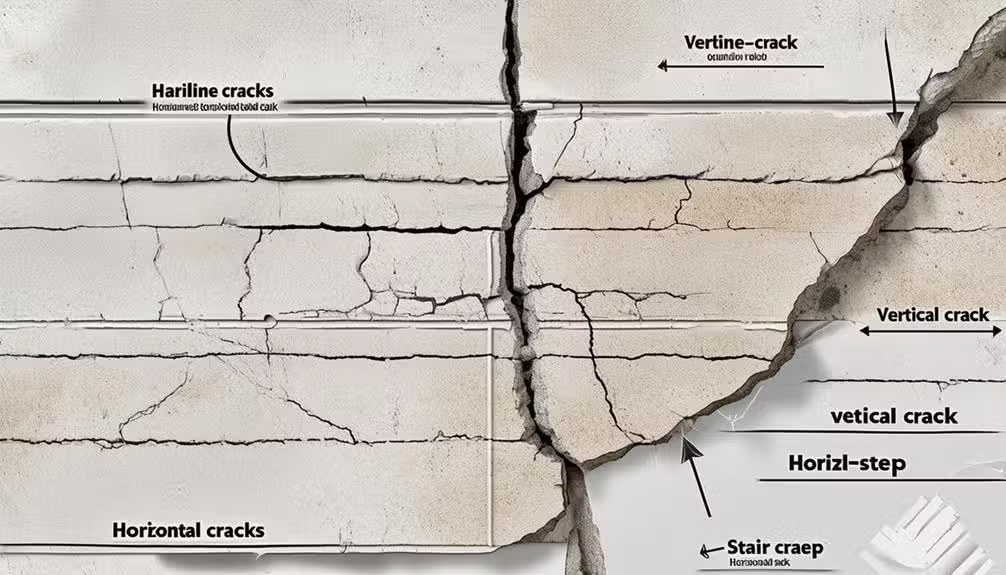
Foundation cracks can be categorized into several types, including vertical, horizontal, diagonal, and stair-step cracks; each indicating different underlying issues. Understanding these crack patterns is vital for determining the appropriate repair methods and addressing structural implications.
Vertical cracks, often less than 1/8 inch in width, usually result from concrete shrinkage and are common in new constructions. They typically don’t pose severe structural risks yet should be sealed to prevent water infiltration.
Horizontal cracks, especially those wider than 1/4 inch, can suggest significant pressure from the surrounding soil and may require professional intervention to reinforce the foundation.
Diagonal cracks forming angles between 30 to 75 degrees often stem from differential settlement. These cracks may require underpinning techniques to stabilize the foundation.
Stair-step cracks that follow the mortar joints in brick or block foundations usually indicate uneven settling. You should monitor these closely as they might require both structural and cosmetic repairs.
To prevent such cracks ensure proper drainage around your foundation and maintain consistent soil moisture levels. Regular inspections and timely repairs using suitable methods like epoxy injections or carbon fiber reinforcements can mitigate potential damage safeguarding your home’s structural integrity.
Causes of Wall Cracks
Why do foundation walls crack? What specific factors contribute to these structural issues? Understanding the root causes is essential for effective prevention techniques and reliable DIY solutions. Several elements influence the integrity of your foundation walls. Misidentifying these factors can lead to common misconceptions and improper repairs exacerbating structural implications.
Consider the following:
- Soil Movement:: Changes in soil moisture levels cause expansion and contraction. For example, clay soils can expand up to 30% when saturated exerting significant pressure on your foundation.
- Hydrostatic Pressure:: Water accumulation around your foundation creates hydrostatic pressure. A pressure increase by 2 psi can exert over 200 pounds of force per square foot on your walls.
- Poor Construction Practices:: Using substandard materials or neglecting proper curing times can weaken the foundation. Concrete should cure for at least 28 days to achieve ideal strength.
- Temperature Fluctuations:: Freeze-thaw cycles can cause concrete to crack. A temperature swing from -10°C to 30°C can result in expansion and contraction stressing the material.
Tools and Materials Needed

To effectively identify & repair foundation wall crac ks you’ll need a well-stocked toolkit that includes specific materials & precise instruments Start with essential materials like hydraulic cement epoxy resin & polyurethane foam These materials are fundamental for various repair techniques guaranteeing a strong & lasting fix
For effective tools include a hammer drill with masonry bits a crack gauge & chisel The hammer drill & bits allow you create precise holes while th ecrack gauge helps measure crac kwidth & monitor changes over time A chisel is necessary for preparing cracked area by removing loose debris
Safety precautions are essential Equip yourself with safety goggles gloves dust mask protect against debris dust A sturdy ladder ensures safe access higher crac ks
You’ll also need caulking gun applying sealants wire brush cleaning injection kit injecting epoxy foam into crac ks Use tape measure accurate measurements mixing bucket preparing materials
Inspecting Foundation Cracks
Start by systematically evaluating each crac k’s length width direction determine severity potential causes damage Document each crac k meticulously Accurate assessment is vital addressing crac k severity ensuring structural integrity found ation Measure following aspects Length Use measuring tape record full extent inches centimeters Width Utilize crac kwidth gauge determine exact width noting whether exceeds1 /16 inch (1 .6 mm ) Direction Note orientation (vertical horizontal diagonal)eachcrack reveals different stress factors Location Identify whethercrack load-bearing wall another critical area Next analyze data distinguish between minor cosmetic issues seriousstructural concerns Hairlinecracks often indicate normal settling whereas wider longercracks could suggestfoundation movement pressurefromsoil expansion Diagonalcracks might pointtodifferentialsettlement seismicactivity Each detail helps prioritize repairs allocate resources effectively ensuring serve clients highest level precision care Your thorough inspection analytical approach will be cornerstone maintainingfoundation’sstructuralintegrity ultimately safeguarding entire building
Hairline Crack Repairs
< p After meticulously documenting analyzing eachcrack addresshairlinecracks which typically less than1 /16 inch(1 .6 mm ) wide often resultfromnormalsettling Beginbycleaningthecrackwithwirebrushtoremoveanydebris Thisensuresidealadhesionforyourchosensealingtechniques ForDIYsolutions utilizeaconcretecrackfillerorepoxyinjectionkit Thesematerialsaredesignedtopenetratedeeply providingalastingseal Applythefillerwithacaulkgun makingsuretheentirecrackisfilled Smooththesurfacewithaputtyknife allowittocureaspermanufacturerinstructions Topreventfuturecracks considerthesepreventiontips maintainproperdrainagearoundyourfoundation keepguttersclean guarantee downspouts directwaterawayfromhouse Consistentmoisturelevelsaroundyourfoundationcanmitigatesettling minimizehairlinecracks Ifhairlinecracker persist worsen seekingprofessionalhelp advisable Structuralengineerscanprovideadetailedassessment recommendadvancedsealingtechniques additionalrepairs