
When it comes to keeping your basement dry, you might say it's all about maintaining a peaceful coexistence with water. You're probably aware that a flooded basement can lead to costly repairs, but the good news is there are practical strategies you can implement without breaking the bank. From simple maintenance tasks to minor improvements, there are effective ways to safeguard your space. Curious about which specific actions can make a significant difference without emptying your wallet? Let's explore some straightforward solutions that might just do the trick.
Assess Your Basement's Vulnerability

When you assess your basement's vulnerability, you'll want to start by identifying any potential entry points for water. Inspect your foundation walls and floors for cracks or gaps, and look for signs of water seepage.
Don't forget to check the condition of basement windows and doors. Evaluate the joints where the foundation meets the walls for any vulnerabilities. Additionally, assess the integrity of your waterproofing techniques to guarantee they're effective.
Next, evaluate your sump pump and drainage systems to confirm everything's functioning properly, especially during storms. Regular maintenance of drainage systems and clear emergency plans will enhance your flood preparedness. By proactively addressing these issues, you can help protect your home and serve your community by sharing valuable insights on preventing basement flooding.
Improve Drainage Around Your Home
After evaluating your basement's vulnerability, improving drainage around your home is a vital step in preventing water damage.
Start by cleaning your gutters and downspouts at least twice a year to avoid clogs, and guarantee downspouts direct water at least 4-6 feet away from your foundation.
Consider installing underground drainage pipes that slope downhill for effective water flow. Identifying the source of standing water is crucial for effective solutions in preventing water accumulation around your property.
Regrading your lawn is also essential; make sure it slopes away from your home to avoid pooling.
You might also explore additional drainage solutions, like dry wells or French drains, to handle excess water.
Regular maintenance of these systems will keep them functioning well, safeguarding your home and serving your community by preventing flooding issues.
Seal Cracks and Openings
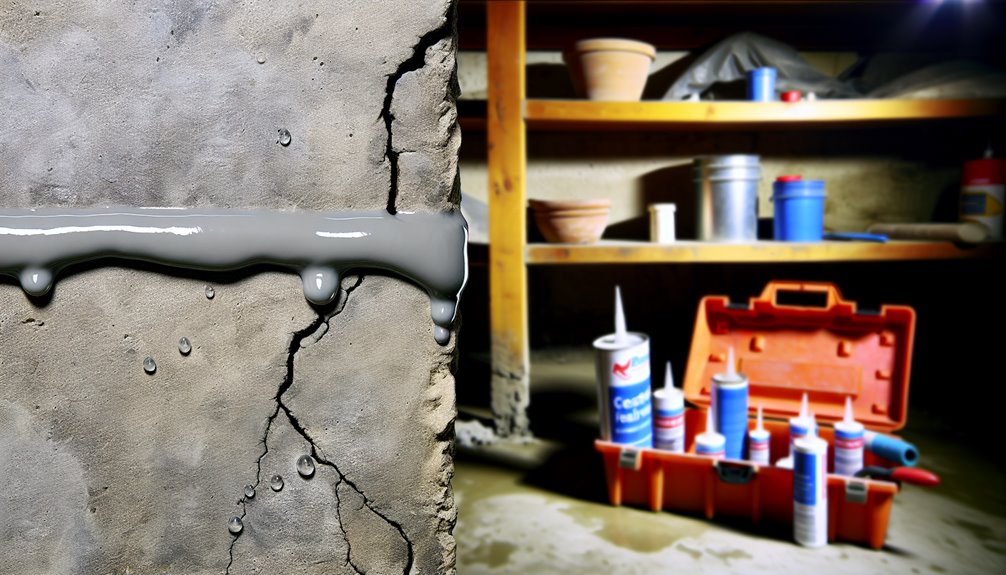
To prevent basement flooding, sealing cracks and openings in your foundation is essential. Start with a thorough crack inspection; look for any visible gaps in your walls.
Identify the source of moisture and clean the cracks to guarantee a good seal. For sealant selection, choose caulk for narrow gaps and epoxy for wider openings, prioritizing options like Liquid Rubber Foundation Sealant for durability.
Make certain your chosen sealant is free from harmful chemicals and compatible with your foundation material. Apply the sealant generously, smoothing it out for a tight fit.
After drying, inspect for any imperfections. Regularly check these areas to maintain a solid defense against moisture, guaranteeing a safer, drier basement for your loved ones.
Maintain Your Gutters and Downspouts
Maintaining your gutters and downspouts is essential for preventing basement flooding, and you should aim to clean them at least twice a year.
Start by wearing rubber gloves and using a small trowel to remove debris, focusing on corners and downspout connections where clogs often form. If you're unsure about cleaning, consider hiring a professional.
Make certain your downspouts are extended at least 5-10 feet away from your foundation to direct water away effectively. Regularly inspect for leaks and blockages during rain.
To boost gutter maintenance, consider installing gutter guards and larger downspouts. With these simple, budget-friendly actions, you can protect your home and help serve others by sharing these tips.
Use a Sump Pump
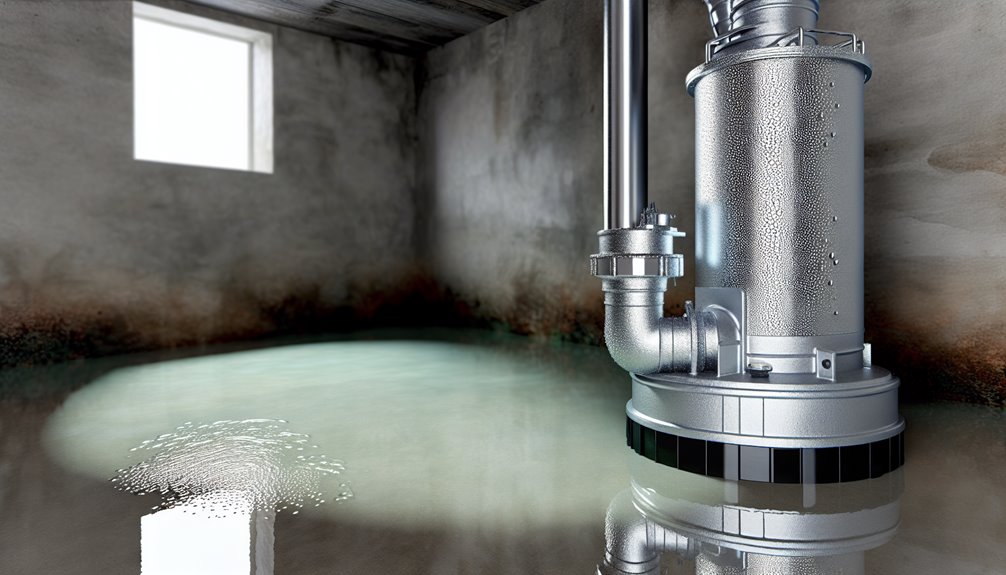
While keeping your gutters and downspouts in top shape is a great start, using a sump pump can provide an extra layer of protection against basement flooding.
Here's how to guarantee effective sump pump installation and maintenance:
- Determine the location: Place the pump in the lowest point of your basement.
- Install and prepare the basin: Dig a hole, add gravel, and wrap it with filter fabric.
- Regular testing: Test the pump several times a year to guarantee it's functioning properly.
- Inspect for leaks: Check all connections after testing to prevent water from seeping back.
Install a French Drain
Installing a French drain can be a game changer for keeping your basement dry and protecting your home from water damage. This effective water management solution redirects surface and groundwater away from your foundation.
For drain installation, dig a trench sloped away from your home, line it with a weed barrier, and place a perforated pipe filled with gravel on top. This setup collects and channels water, reducing the risk of flooding.
Don't forget to cover the pipe with more gravel and wrap excess fabric to prevent clogs. With careful planning and execution, you can enjoy a dry basement without breaking the bank—making your home a safer place for everyone.
Manage Indoor Humidity

To keep your basement dry, managing indoor humidity is essential. Effective humidity control can prevent moisture issues and improve air quality.
Here are some budget-friendly ventilation strategies to contemplate:
- Install Exhaust Fans: Place them in windows or walls to expel moist air and enhance circulation.
- Use Dehumidifiers: Aim to maintain humidity levels between 40-60%. Smart models can adjust automatically.
- Improve Insulation: Proper insulation reduces condensation. Consider spray foam and add vapor barriers.
- Seal Cracks and Gaps: Regularly inspect your basement and use sealants to fill any openings.
Implementing these strategies will help you create a healthier environment while serving your community by preventing water damage.
Create a Water Barrier
Creating a water barrier around your basement can greatly reduce the risk of flooding, especially during heavy rains or storms.
Start with sandbag placement around vulnerable entry points like doors and windows. Stack them in layers to effectively manage rising water levels.
Consider lightweight activated flood bags, which expand when wet, offering a practical flood barrier option. Additionally, seal air vents in your foundation with durable plastic sheeting, ensuring they can withstand considerable water pressure.
Don't forget to maintain proper yard drainage by ensuring surfaces slope away from your home.
These budget-friendly strategies can greatly enhance your basement's flood protection, making your home safer for you and your loved ones.
Conclusion
By taking these simple steps, you can keep your basement dry without emptying your wallet. Think of your home as a fortress—each measure you implement is a brick in the wall against flooding. Regular maintenance and proactive strategies are your best allies in this battle. So roll up your sleeves, tackle those tasks, and enjoy peace of mind knowing your basement is protected from water woes. After all, a little effort today can save you a lot of trouble tomorrow.
If you're looking for more tips or need professional assistance, I invite you to visit Eco Pro Restoration at ecoprorestoration.com or give them a call at (410) 645-0274. The team there is friendly and knowledgeable, ready to help you keep your basement safe and dry. Don't hesitate to reach out—your peace of mind is just a click or a call away!