
You can turn a small leak into a building‑wide microbial event in a weekend if you miss the basics: you ignore hidden moisture and skip psychrometric targets, you work without fit‑tested respirators and proper PPE, you use harsh chemicals that aerosolize spores or etch surfaces, you disturb colonies without containment and negative pressure, and you hesitate when Category 3 water or structural compromise appears. Want the concise, standards‑based checklist that prevents these costly errors?
Ignoring Hidden Moisture and Inadequate Drying
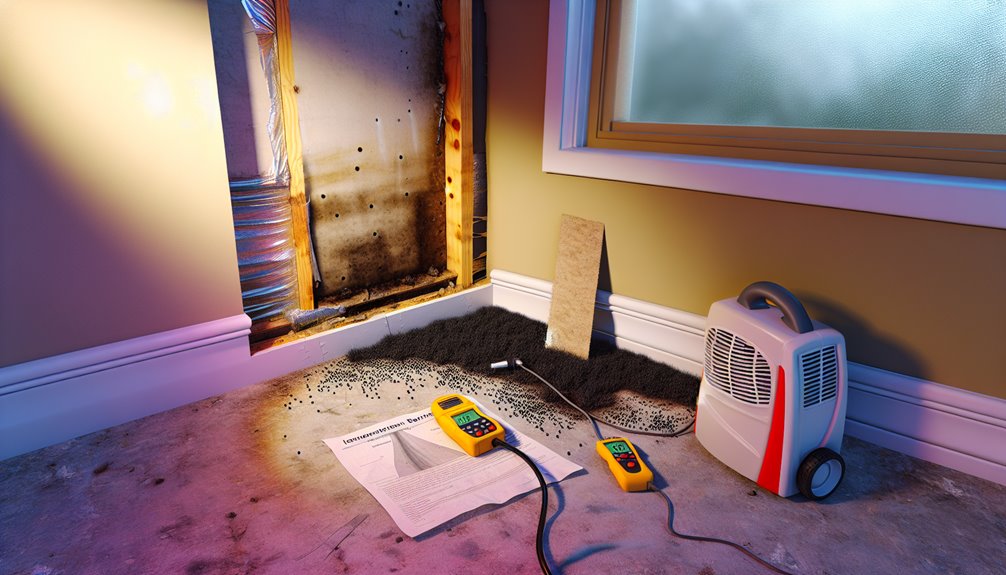
Even when surfaces feel dry, capillary action and hygroscopic materials can retain bound water that fuels mold growth and structural decay. You prevent this by applying ANSI/IICRC S500/S520 principles: quantify, verify, and document. Use moisture mapping to locate elevated readings behind finishes, under plates, and at interstitial cavities. Validate with pin/pinless drying meters, infrared thermography, and borescope inspections. Establish psychrometric control—measure grains per pound, maintain vapor pressure differentials, and balance air exchange. Calculate equipment needs via AHAM-rated dehumidification and ACH targets. Set drying goals to EMC, then monitor daily until equilibrium is achieved. Share data; align decisions with consensus standards.
Skipping Proper Personal Protective Equipment
Skipping PPE invites preventable exposures to respirable mold spores, mycotoxins, endotoxins, and Category 2–3 waterborne contaminants that exceed typical residential background levels. You protect yourself and the team by aligning with CDC/NIOSH guidance and IICRC S520/S500. Verify respirator fitment (qualitative or quantitative) before entry; use NIOSH-approved N95 at minimum, preferably half-face elastomeric with P100/OV/AG cartridges if odors or solvents are present. Specify eye protection (sealed goggles), and hearing protection where dryers run. Prioritize glove selection: nitrile for general tasks, neoprene or butyl for prolonged wet work. Wear disposable coveralls and waterproof boots. Decontaminate and doff using a clean-to-dirty sequence.
Using the Wrong Cleaning Methods or Chemicals

Although it seems intuitive to “kill mold” with whatever disinfectant is on hand, mismatched chemistries and methods can aerosolize spores, drive hyphal fragments deeper into substrates, corrode materials, and violate IICRC S520/S500 work practices. Choose agent-to-material compatibility, not convenience. Sodium hypochlorite on cellulose is a wrong cleaner; it oxidizes surfaces, leaves salts, and doesn’t penetrate. Avoid abrasive scrubbing on porous media; it disrupts biofilms and damages fibers, complicating post-remediation verification. Use detergent-based source removal, HEPA vacuuming, and damp-wipe techniques aligned with manufacturer SDS and pH tolerance. Verify dwell times, rinse protocols, and residue limits. Your discipline protects both the structure and the team.
Disturbing Mold Without Containment or Ventilation Control
When you cut, pull, or brush moldy materials without engineered containment and negative pressure, you aerosolize spores, fragments, and mycotoxins and cross-contaminate clean areas. You need source containment, pressure differentials, and airflow management that comply with IICRC S520 and OSHA guidance. Establish HEPA isolation using sealed barriers, zipper doors, and dedicated negative air machines exhausting outdoors. Verify −5 to −15 Pa with manometer readings. Disable HVAC to prevent redistribution. Use point-of-generation capture and damp methods to minimize particulate release. Wear appropriate PPE and decontaminate tools. Maintain controlled egress and waste bagging. Validate with visual inspection and post-cleaning particle counts.
Delaying Professional Help When Structural or Health Risks Exist
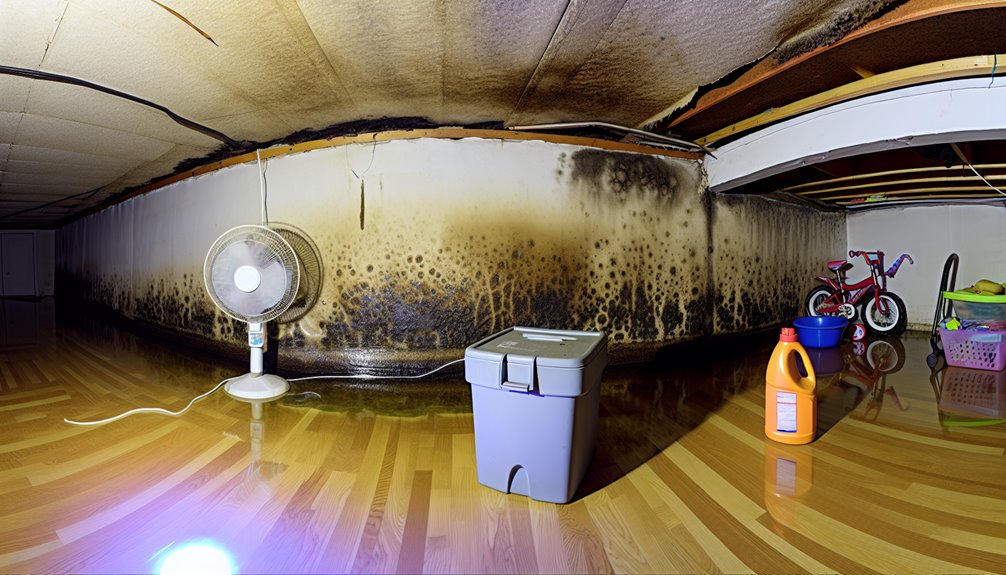
Even if you prefer DIY, postponing a licensed assessment once you see structural compromise, Category 3 water, or suspected toxigenic mold elevates risk and liability. You need rapid triage per IICRC S500/S520 and local code. Engage a qualified contractor for a structural assessment to verify load paths, shear integrity, and fastener corrosion. Delay can trigger progressive failure, microbial amplification, and aerosolized mycotoxins. Coordinate medical health screening for occupants with asthma, immunosuppression, or exposure symptoms. Professionals perform moisture mapping, negative-air engineering, and waste segregation to OSHA/EPA standards. Acting early protects your team, documents due diligence, preserves insurance coverage, and stabilizes the building.
Conclusion
As the owner of Eco Pro Restoration, I’ve seen firsthand how the small shortcuts people take during DIY water or mold cleanup can turn a fixable problem into a major headache. We use proven standards like ANSI/IICRC S500/S520, proper moisture mapping and psychrometrics, fit‑tested respirators, HEPA controls, and the right biocides at the correct contact times so you don’t have to worry about turning a cleanup into a health or liability risk. If you’d like to learn more or get professional help, please visit ecoprorestoration.com or give us a call at (410) 645-0274 — we’re here to help and would be glad to walk you through your options.