
You don’t need a lab for every musty spot, but you do need clear criteria. If visible mold exceeds ~10 sq ft, humidity stays >60%, wood moisture tops 16%, or odors persist after cleanup, it’s time to call a certified inspector. Add urgency after floods, sewage events, HVAC involvement, or unexplained respiratory symptoms. Pros use moisture mapping, thermal imaging, and targeted sampling with lab analysis—then provide written remediation guidance and clearance benchmarks. Here’s how to decide precisely when.
Why Mold Grows and Why It Matters
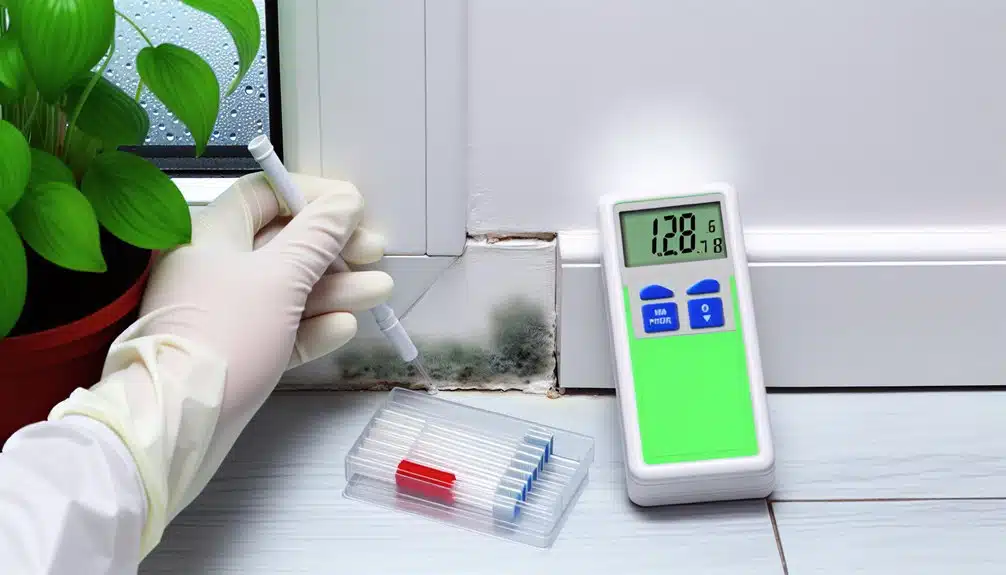
Although mold is a natural part of the environment, it proliferates indoors when three variables align: moisture, organic nutrients, and suitable temperature. You manage risk by quantifying each factor. Keep relative humidity below 50% with calibrated sensors and active humidity control. Limit condensation via airtightness and insulated building materials, especially at thermal bridges. Remove nutrient sources by cleaning dust, fixing leaks, and selecting low-cellulose finishes. Why it matters: mold damages substrates, elevates spore and mycotoxin loads, and degrades indoor air quality, triggering asthma and allergies. Early, data-driven prevention protects occupants, preserves asset value, and reduces remediation costs across your community.
Signs You Can Handle With DIY Cleaning
When growth is limited in scope and well-characterized, you can address it safely with DIY methods. Focus on measurable criteria and stick to controlled, repeatable steps. If conditions align, you’ll keep risk low and results consistent through surface cleaning and drying.
- Spots are ≤10 square feet, confined to non-porous materials; no swelling or crumble.
- You see superficial film or minor stains on tile, glass, sealed metal, or finished paint.
- Moisture source is known, corrected, and humidity stays <50% for 48 hours.
- No earthy odor persists after ventilation and cleaning.
- No visible spread after 72 hours; cleaned areas remain dry and intact.
Red Flags That Require a Certified Professional

If indicators exceed DIY thresholds, treat them as escalation triggers that warrant a certified mold professional. You should escalate when moisture meters read >16% wood moisture content, relative humidity stays >60% for 48 hours, or visible stains spread beyond 10 sq ft (per EPA benchmark). Prior floods, sewage events, or HVAC contamination are red flags. Musty odors persisting after cleaning suggest concealed growth. Immunocompromised occupants or recurrent symptoms increase risk. Attic or crawlspace discoloration, warped drywall, and efflorescence indicate ongoing intrusion. Recurrent surface regrowth after biocide use signals resistant reservoirs. Professional air sampling and wall-cavity assessment quantify spore load and identify sources accurately.
What a Certified Mold Inspection Includes
Because decisions hinge on measurable evidence, a certified mold inspection follows a defined protocol: a structured intake on building history and occupant symptoms; instrumented moisture mapping (pin/pinless meters) and thermal imaging to locate wet assemblies; calibrated hygrometry to log temperature, RH, and dew point; visual survey with condition grading (IICRC S520/EPA criteria); targeted and control sampling (spore trap air, surface tape/lift, bulk) per a sampling plan; chain-of-custody handling to an AIHA-accredited lab; on-site or in-wall diagnostics (borescope, cavity air) where indicated; and a written report that quantifies spore loads, identifies genera, correlates moisture sources, defines containment/remediation scope (per ANSI/IICRC S520), and sets post-remediation verification criteria.
- Establish objectives and sampling rationale.
- Perform air sampling alongside surface mapping.
- Document source-pathway-receptor relationships.
- Compare findings to outdoor controls and baselines.
- Deliver prioritized actions and verification steps.
Types of Mold Testing and When Each Is Used

A calibrated mold assessment uses multiple test types, each selected for a specific diagnostic question, matrix, and data quality objective. You’ll use air sampling to quantify spore concentrations, compare indoors to outdoors, and detect aerosolized reservoirs. Surface tape-lifts document visible growth and species on finished materials. Swab or bulk samples characterize suspect dust, contents, or deteriorated substrates. Culturable samples isolate viable organisms for antibiotic sensitivity or species confirmation, while PCR quantifies target DNA when low biomass skews culture. ERMI/HERTSMI dust metrics benchmark chronic loading. Moisture mapping guides where to sample. Finally, you’ll perform clearance testing post-remediation to verify normalization against project criteria.
How Inspectors Find Hidden Moisture and Sources
Those test results only make sense when you know where moisture enters, accumulates, and persists. Certified inspectors use standardized protocols to trace hidden sources with measurable certainty. You’ll see them combine instruments, building science, and pattern recognition so you feel included in each decision.
- Thermal imaging locates cold anomalies indicating evaporative cooling behind walls and ceilings.
- Hygrometer mapping charts room-by-room relative humidity and dew point gradients.
- Pin and pinless meters quantify substrate moisture percentage and depth profiles.
- Borescope inspections verify cavity conditions without destructive cuts.
- Pressure diagnostics (blower-door, zonal pressure) reveal infiltration routes at envelopes and chases.
This method isolates causes, not just symptoms.
Interpreting Test Results and Setting a Remediation Plan
Once sampling’s complete, you correlate quantified findings with moisture mapping to decide scope. You compare indoor/outdoor spore ratios, species profiles, and particle sizes, noting interpretation nuances like Stachybotrys prevalence despite low counts or Chaetomium as a chronic water marker. You flag rooms exceeding baseline by >3x or showing toxigenic dominance. You align results with materials: gypsum, OSB, or carpet require different containment and removal.
You draft a remediation plan: isolate zones, define negative pressure, HEPA removal, source correction, and verification criteria. You schedule sequencing to minimize disruption and control costs. You complete remediation budgeting using labor hours, containment square footage, and clearance testing.
Choosing a Qualified, Independent Inspector
Even before you compare quotes, define what “qualified and independent” means: a third-party consultant with no financial ties to remediation, current certifications (e.g., CIEC, CIH, ACAC), documented training in building science and moisture diagnostics, calibrated instruments (spore trap pumps, moisture meters, IR cameras) with recent certificates, and a written QA/QC protocol. You deserve rigor and conflict avoidance through independent credentials and transparent methods.
- Request a sample report with chain-of-custody and field blanks.
- Verify insurance (E&O, professional liability).
- Confirm lab accreditation (AIHA LAP, NVLAP).
- Ask for references and project scope alignment.
- Require signed independence and no-remediation statement.
Preventing Future Mold Growth and Monitoring Your Home
With an independent inspector selected and a baseline documented, shift to controlling the variables that allow mold to colonize: moisture availability, temperature, nutrients, and time. Maintain 30–50% RH via dehumidifiers, smart thermostats, and continuous Humidity control; verify with calibrated hygrometers on each floor. Target 68–72°F, minimizing cold surfaces and condensation. Fix leaks within 24 hours; dry wet materials within 48 hours. Upgrade to MERV-13 filtration and guarantee 0.35 ACH ventilation or manufacturer-specified rates. Schedule Routine inspections each season; log readings and photos. Clean dust (nutrient source) with HEPA vacuums. Install leak sensors, drain pan floats, and overflow shutoffs.
Conclusion
As the owner of Eco Pro Restoration, I want you to feel confident taking the next step: prioritize moisture control (keep RH under 60% and wood moisture under 16%), act quickly—mold can colonize damp drywall in 24–48 hours—and call us when you spot red flags like more than 10 sq ft of visible growth, persistent dampness, musty odors, or if vulnerable household members are at risk. We’ll provide moisture mapping, targeted sampling, accredited lab reporting, and a written remediation plan with measurable clearance criteria so you know the job’s done right. Please visit ecoprorestoration.com to learn more, or give me a call at (410) 645-0274 — I’m here to help and would be happy to answer your questions.