
If your home smells musty after pets, you’re likely dealing with urine byproducts, skin oils, dander, and microbial VOCs embedded in porous surfaces. You’ll need enzyme-based cleaners to break proteins and urease activity, adsorbents like baking soda or activated charcoal, and strict drying and ventilation with 40–50% RH. HEPA vacuuming, textile laundering, and HVAC filter changes matter, too. But success hinges on finding hidden reservoirs—and knowing when DIY stops working…
How Pet Odors Form and Why They Linger

Although every species and home is different, most stubborn pet odors trace back to a few chemistries: volatile organic compounds (VOCs) from skin oils and saliva; ammonia and amines from urine; sulfur compounds from feces and anal gland secretions; and microbial metabolites produced as bacteria and fungi digest residual soils. You notice persistence because porous materials absorb VOCs, while carpets and padding trap moisture that sustains microbial activity. Warmth and humidity accelerate bacterial breakdown and volatilization. pH shifts from urine hydrolysis amplify ammonia release. Air exchanges dilute but don’t remove reservoirs. Safe control starts with source mapping, material assessment, moisture reduction, and ventilation verification.
Pet-Safe Cleaners That Neutralize Smells at the Source
Understanding the chemistry behind lingering pet odors lets you choose cleaners that neutralize them instead of masking. Prioritize enzyme sprays; protease and urease enzymes catalyze breakdown of urine crystals and proteins into inert byproducts. Verify pet-safe labels, neutral pH, and no added perfumes. For carpets, spot-test, saturate beyond the stain edge, and allow full dwell time per manufacturer data. Use baking soda to buffer acidity and adsorb volatile compounds; vacuum thoroughly after drying. Apply diluted citrus vinegar (acetic acid plus citrus terpenes) to disrupt amine odors on hard surfaces; rinse to protect finishes. Deploy activated charcoal to adsorb residual VOCs.
Drying, Ventilation, and Humidity Control Strategies
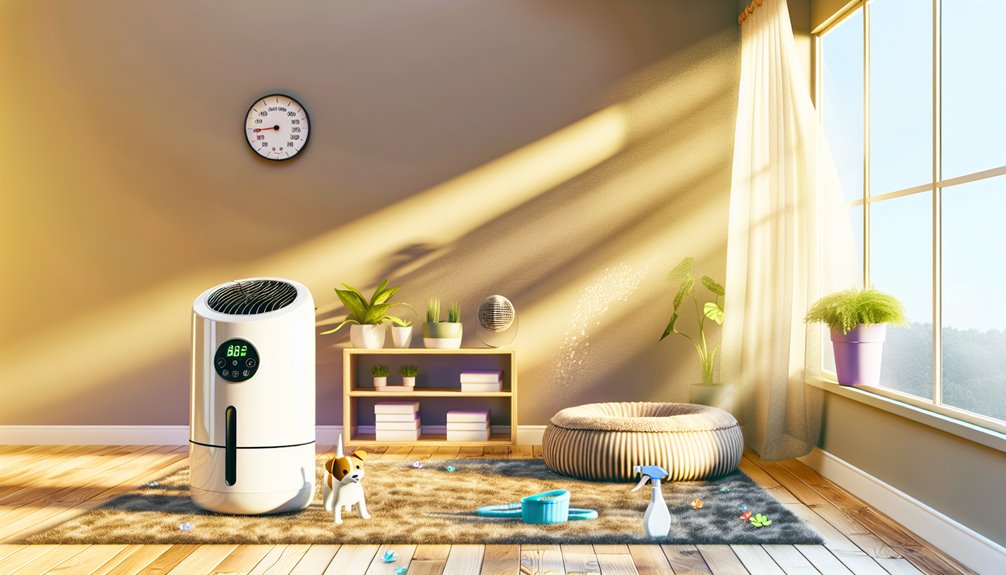
When pet odors linger, control moisture first: accelerate drying, increase air changes, and keep indoor relative humidity at 40–50%. Use fans for airflow optimization, directing cross-breezes from low to high exits. Run a dehumidifier sized to room volume; verify with moisture monitors and a calibrated hygrometer. After cleaning, extract residual water with a wet/dry vac; then elevate items to expose all sides. Ventilate baths and litter areas continuously with 10–12 air changes per hour when feasible. Prevent condensation by warming surfaces and sealing leaks. Replace damp substrates promptly. You’ll protect pets’ airways, slow microbial growth, and keep your space welcoming.
Odor Traps: Carpets, Fabrics, and HVAC Filters
Start with the worst reservoirs: porous carpets, upholstery, bedding, and the HVAC filter that recirculates their byproducts. Pet dander, skin lipids, and microbial metabolites bind to fibers and pile. Vacuum slowly with a sealed HEPA unit; agitate the pile to extract particulates. Spot-treat with enzyme-compatible cleaners; blot, don’t rub, to protect backing. Launder textiles hot per label; fully dry to below 60% RH. For HVAC, upgrade to high-MERV replaceable filters; change on schedule to reduce recirculated odor compounds. Avoid masking sprays; use inert odor sachets only as adjuncts. Document what you clean so the whole household can participate consistently.
When to DIY, When to Hire Pros, and How to Prevent Return Odors

Those reservoirs you just addressed set the baseline; now decide what you can safely manage versus what needs professional equipment and containment. DIY suits isolated, recent incidents: hard surfaces, small fabric spots, and accessible ducts using enzymatic cleaners, HEPA vacuums, and dry times verified by a moisture meter. Hire pros for chronic mustiness, subfloor saturation, HVAC contamination, or odor linked to visible mold—risk exceeds home PPE.
Use timing cues: reappearance within 24–72 hours signals hidden reservoirs. Do a cost benefit check: pro remediation prevents repeat labor and pet stress. Prevent returns: maintain humidity 40–50%, upgrade filtration (MERV 11+), seal gaps, clean pet zones routinely.
Conclusion
As the owner of Eco Pro Restoration, I want you to know we’ve seen how simple, safe steps—like using enzyme cleaners, keeping humidity around 40–50%, ventilating, swapping HEPA filters, and thoroughly cleaning textiles and carpets—really make a difference in getting rid of musty, lingering pet smells. If odors persist despite your best efforts, we’re happy to help with professional extraction and treatment to find and remove hidden sources. Please visit ecoprorestoration.com to learn more or give us a call at (410) 645-0274 — we’re here to help keep your pets, your air, and your home comfortable and healthy.