
Like a tide slipping under a door, water finds every weak joint in Baltimore’s old brick and timber. You cut power, shut gas, open windows, and photograph each room before a single board is moved. Then you map moisture with pinless meters, probe discreetly, and scan plaster for hidden damp. You dry slow—modest heat, steady airflow—to spare lime plaster, heart pine, and handmade brick. You match mortars and millwork, document everything, secure permits—and then comes the hard part.
Immediate Safety, Stabilization, and Water Removal

Step in with caution and a preservation mindset: before touching a soaked plaster wall or heart‑pine floor, cut power at the main if outlets or wiring were submerged, shut off gas, and ventilate to dissipate moisture and contaminants. Wear gloves, boots, and an N95; prioritize personal safety. Post emergency contacts where everyone can see them. Photograph conditions, tag rooms, and save original hardware. Stop active intrusion: tarp roof leaks, board sash openings, and divert runoff from stone foundations. Establish controlled drying: open windows when humidity’s lower outside, deploy box fans gently, and use dehumidifiers. Begin water removal with soft squeegees and wet vacuums, protecting historic finishes.
Assessing Moisture Behind Plaster, Trim, and Masonry
With power safe and surface water managed, turn to what you can’t see—moisture trapped behind plaster, trim, and masonry that threatens keys, lath, and embedded timbers. Begin with gentle probing: note hollow sounds, hairline crazing, and salt efflorescence at bases and chimney breasts. Use pinless meters on finished faces, then confirm with discreet pin readings in sacrificial areas. Employ thermal imaging at dawn or evening to reveal cold, damp voids without chasing ghosts from sun-warmed walls. Log room-by-room humidity monitoring, aiming for gradual equilibrium. Lift baseboards carefully to inspect cavities, document with dated photos, and mark boundaries in chalk for later treatment.
Drying Methods That Protect Historic Materials
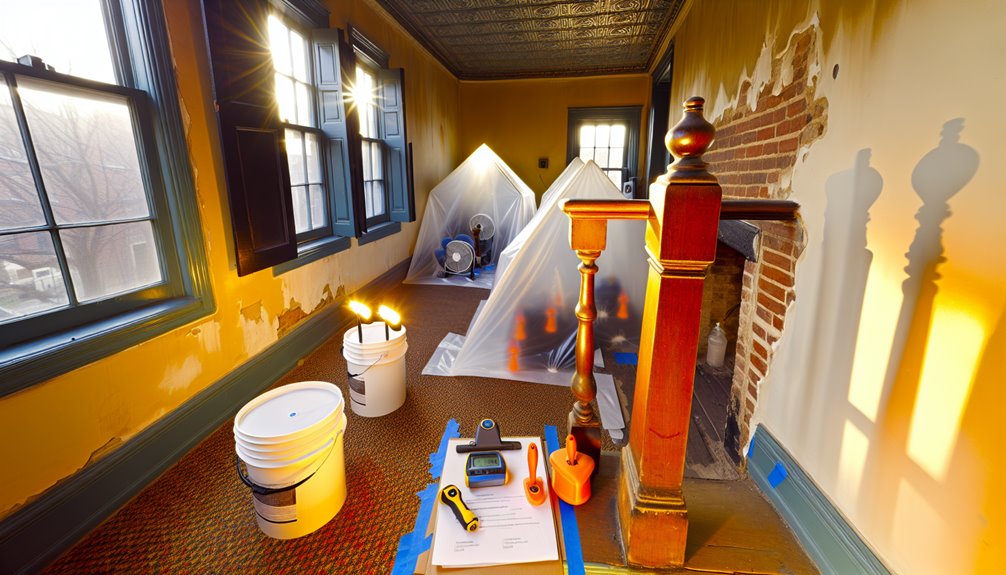
Favor slow, controlled drying that spares lime plaster, heart pine, and soft handmade brick from shock. You’ll steward the house by balancing air exchange, gentle dehumidification, and heritage safe heat. Hold temperatures modest; keep relative humidity around 40–50% to resist salt bloom and plaster craze. Use indirect airflow: angle fans to move room air, not blast finishes. Lift baseboards carefully to vent cavities; open sash a crack to relieve vapor without drafts. Elevate rugs and shellac-block stains only after readings stabilize. Track moisture with a pin meter, logging daily. Pause when readings plateau; adjust equipment, not speed. Let patience preserve fabric.
Repairing Brick, Mortar, and Foundations
Start by reading the masonry like a ledger of past work: map flood lines, spalls, salt crusts, bulged wythes, and hairline stair cracks before you touch a tool. Test mortar hardness and composition; match lime content, sand gradation, and joint profile. Prioritize dewatering from the exterior, then remove soluble salts with dry brushing and poultices. Execute brick consolidation only after confirming units are sound; reject face-brick with delamination. Pin cracked wythes with stainless helical ties, not resin anchors. Rake joints by hand, repoint damp-set in lifts, and protect cures. Survey settlement; stage foundation underpinning in short sections, maintaining bearing and historic elevations.
Restoring Wood Framing, Floors, and Decorative Finishes

Brickwork stabilized and salts managed, you can turn to the soaked timber that ties floors, partitions, and finishes to the shell. Probe joists with an awl; retain sound heartwood, scarf in dutchman repairs where decay is isolated. Sister beams with species-matched lumber, not steel, to preserve vibration and depth. Dry slowly: cross-ventilate, dehumidify, and monitor moisture to 12–15% before closing. Lift baseboards, number them, and rebed with lime putty. For parquet restoration, relay lifted blocks with hide glue; feather new pieces from salvaged stock. Strip shellac gently, then reamalgamate. Complete sash rehabilitation with spliced rails, linseed putty, and tuned balances.
Navigating Insurance, Permits, and Preservation Standards
Although drying timbers and sash repairs feel tangible, you’ll protect the project by aligning paperwork first: notify your insurer within 24–48 hours, photograph every room and assembly before disturbance, and log salvageable fabric by location and date. Ask your adjuster to reference the Secretary of the Interior’s Standards; request line items for like-with-like materials and traditional methods. File an emergency permit with CHAP, noting character-defining elements and any façade easements. Secure written approvals before removals. Retain a preservation architect’s affidavit. Track receipts for grant appeals and tax credits. Keep a neighborly paper trail—dated emails, site diaries, annotated plans—so your house’s story reads true.
Preventing Future Intrusion: Drainage, Waterproofing, and Maintenance
Even as repairs progress, you’ll fortify the house by treating water management as part of its historic fabric, not an aftermarket add-on. Begin at the perimeter: establish positive grading slopes away from foundations, preserving original stoops and steps. Repoint masonry with lime mortar, not Portland, to let walls breathe. Install discreet French drains, lined with washed stone and filter fabric, discharging to approved outlets. Use brush-applied mineral waterproofing on below-grade walls; avoid trapped-vapor membranes. Maintain half-round gutters, soldered seams, and properly sized downspouts to boots. Practice vegetation management: trim roots from brickwork, lift vines from mortar, and keep leaf guards clean. Conduct seasonal inspections.
Conclusion
I’ve steadied the house, traced hidden moisture, and dried it like a conservator—slow, even, and gentle. Now I’ll repair brick with lime-rich mortar, sister sound framing, relay heart pine, and return plaster and trim exactly where they belong, each piece cataloged like a vinyl playlist. With insurers notified, permits secured, and preservation standards in hand, I’ll finish strong: tune drainage, maintain flashing and gutters, and schedule inspections so this Baltimore heirloom endures the next storm with dignity. If you’d like to learn more about what we do or need help restoring your own home, please visit ecoprorestoration.com or call me at (410) 645-0274 — I’d be glad to talk through your project and welcome you into the Eco Pro Restoration family.