
If you're a Maryland homeowner, you might be wondering whether investing in a French drain is worth it for your property. These systems promise to manage excess water and protect your foundation, but do they really deliver on that promise? As you consider the unique climate challenges in Maryland, it's important to weigh the potential benefits against the costs and maintenance involved. There's more to uncover about how these systems compare to other drainage solutions and whether they truly fit your needs. What aspects should you prioritize in your decision?
What Is a French Drain?
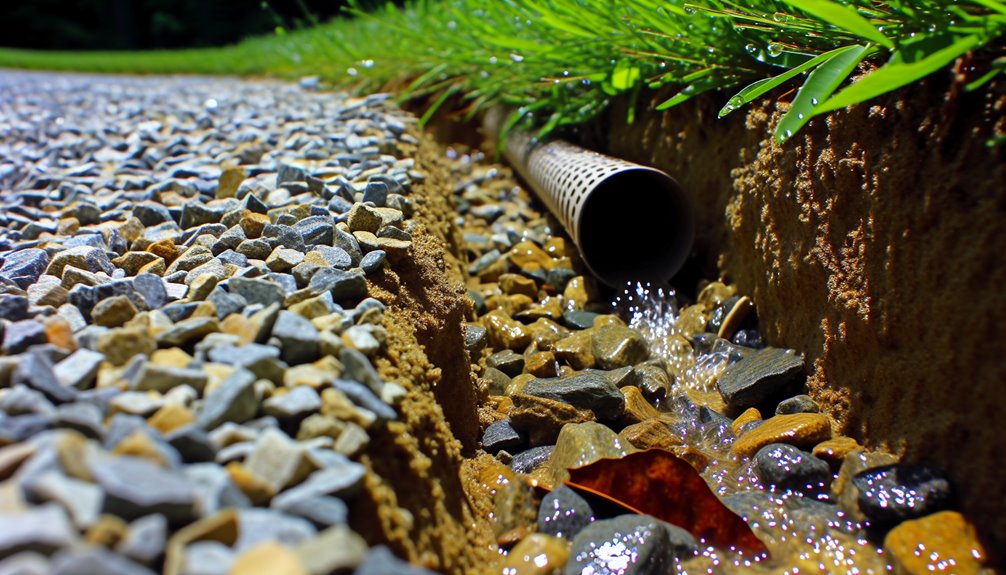
A French drain, often referred to as a trench drain or weeping tile, is an effective solution for managing excess water around your property.
Historically, this system emerged when terracotta tiles were commonly used for drainage. Today, it typically consists of a trench filled with gravel or rock, sometimes featuring a perforated pipe known as a weeping tile. There are various design variations, allowing you to customize your installation based on your specific needs. You might also consider adding a weed barrier to prevent clogging and a catch basin for efficient surface water entry. Understanding these components can help you make informed decisions when installing a French drain to protect your property from water damage.
How French Drains Work
French drains work by creating a reliable system for managing excess water around your property, ensuring that moisture doesn't compromise your foundation.
These drainage systems collect groundwater seeping into your foundation and surface water through a drain inlet. A trench filled with gravel and a perforated pipe gathers this water, while a permeable fabric prevents clogging. The French drain system is designed to prevent water accumulation, which ultimately protects your structural integrity.
The pipe, sloped to facilitate flow, channels water downward through its perforations facing the soil. As gravity moves the water, it reaches a designated discharge point, which could be a sump pit or drainage ditch.
Benefits of French Drains
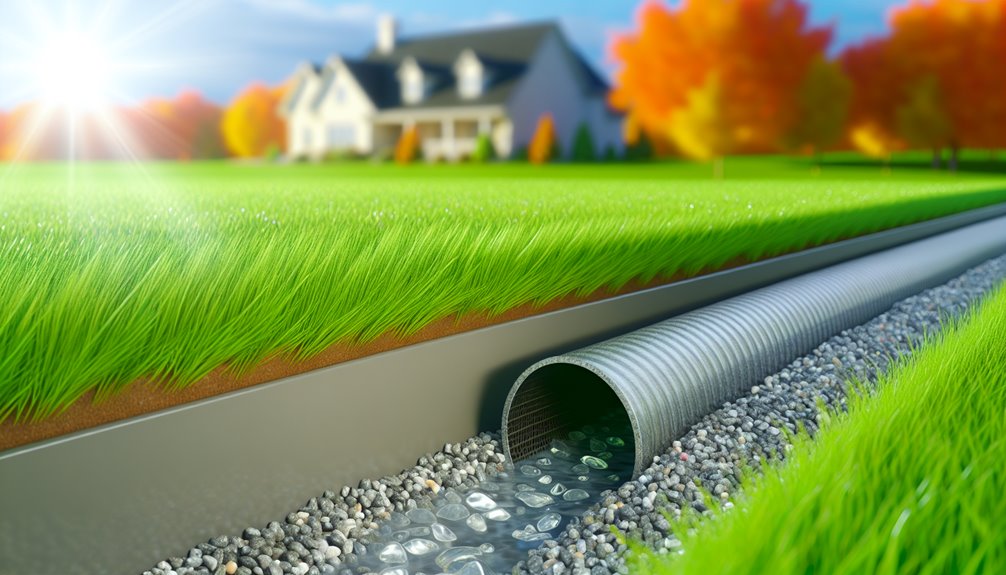
Managing excess water effectively with a French drain not only protects your property but also offers a range of benefits that enhance your living environment.
By improving drainage efficiency, these systems divert water away from your home's foundation, safeguarding it from costly damage. You'll notice reduced risks of flooding and water seepage into basements or crawlspaces, ensuring a dry, stable environment.
Additionally, a French drain transforms your yard, making it more usable and enjoyable. No more muddy patches; instead, you can create beautiful gardens or play areas.
With minimal maintenance required, you'll also save money in the long run, as this efficient water management solution extends the lifespan of your home's foundation and prevents expensive repairs.
Common Problems They Solve
When it comes to tackling water issues around your property, installing a French drain is an effective solution that addresses several common problems.
Here are four key issues they resolve:
- Standing Water: French drains redirect water, enhancing yard aesthetics and promoting healthier landscapes.
- Soil Erosion: By managing water flow, they prevent soil erosion, preserving your yard's integrity.
- Structural Damage: They help keep water away from foundations, reducing the risk of costly structural problems.
- Lawn Usability: Transform damp areas into usable spaces for gardening or recreation, making your yard more enjoyable.
With a French drain, you can create a more functional and beautiful outdoor environment while protecting your property from potential water damage.
French Drains vs. Other Solutions

Finding the right drainage solution for your property can be challenging, especially with various options available. French drains are popular, but consider drain alternatives like J-Drain. This cost-effective option simplifies installation techniques, requiring less excavation and labor.
Unlike traditional French drains, which can clog and demand ongoing maintenance, J-Drain offers durability and environmental benefits, minimizing soil disruption.
If you're dealing with basement moisture, interior perimeter drainage systems might be the better choice. They're easier to access and maintain compared to exterior French drains.
Ultimately, evaluating your property's needs and understanding these options will help you choose the best drainage solution while ensuring long-term effectiveness and efficiency.
Installation Process Overview
To guarantee a successful French drain installation, start with a thorough assessment of your yard's drainage needs.
You'll want to take into account the following steps:
- Planning and Assessment: Identify moisture-prone areas and determine the best location for your drain.
- Trench Preparation: Mark the path, ensuring a consistent slope for effective water flow.
- Laying Components: Install filter fabric and perforated pipe, keeping everything centrally placed and sloped.
- Finalizing the System: Cover the pipe with gravel and restore the trench to maintain efficiency.
Maintenance Requirements
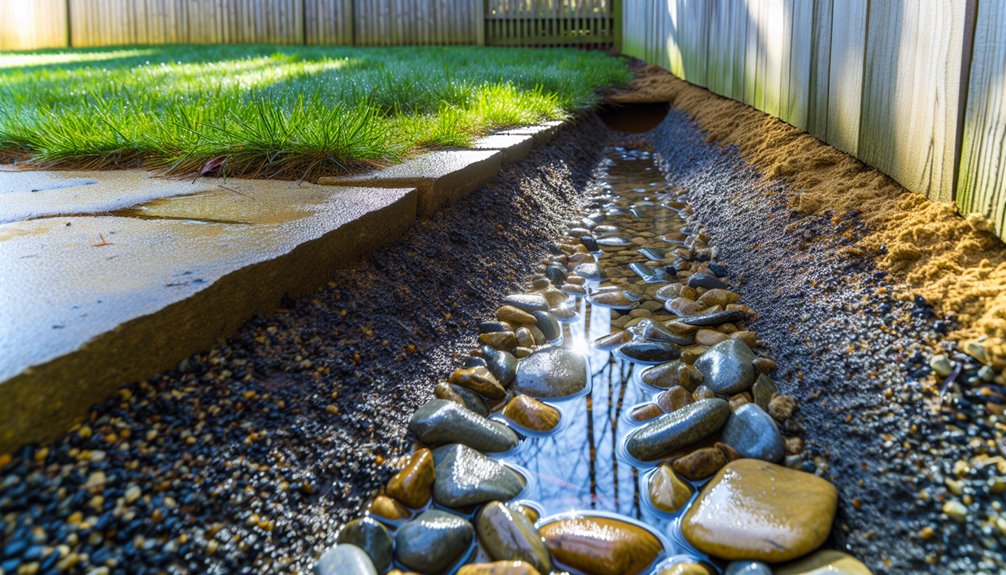
Proper maintenance is key to keeping your French drain functioning effectively after installation. To guarantee peak performance, conduct annual inspections, ideally twice a year in spring and fall.
If your area has mature trees or collects debris, increase the frequency of checks. Use effective drainage techniques by flushing the system with water to clear sediment and debris.
Clear any obstructions from the perforated pipe and gravel, and inspect the exit point regularly. Look for signs of trouble like puddles or unpleasant odors, which can indicate blockages.
Regular evaluations will help determine whether you need cleaning or if replacement is necessary. Following these maintenance tips will guarantee your French drain serves you well for years to come.
Cost Considerations
Installing a French drain in Maryland can cost anywhere from $500 to $18,000, depending on various factors.
To help you understand the cost breakdown, consider these installation factors:
- Linear Footage: Average costs range from $25.43 to $27.86 per linear foot.
- Materials: Piping and gravel can add $50 to $1,500 to your total.
- Labor: Expect to pay $50 to $200 per hour for skilled labor.
- Drain Type: Interior drains typically cost more, ranging from $4,000 to $15,000.
Climate Impact in Maryland

While Maryland's diverse climate brings unique challenges, it also highlights the importance of effective drainage solutions like French drains.
With climate trends showing increased rainfall during spring and summer, you're likely to face significant water accumulation. The humid subtropical climate in eastern Maryland exacerbates this, making water pooling and erosion common issues.
French drains are designed to manage these precipitation patterns, absorbing and redirecting water away from your property.
In western Maryland, where temperatures can swing dramatically, effective drainage is equally vital. By installing French drains, you can prevent murky soil and water intrusion, ensuring your landscape remains healthy and functional.
Regular maintenance will keep these systems performing well, allowing you to serve your community with confidence.
Making the Right Choice
Choosing the right drainage solution can feel overwhelming, but understanding your specific needs makes the process simpler.
Here are four key factors to evaluate:
- Soil Assessment: Evaluate your soil type and drainage capabilities to determine the best option.
- Water Accumulation: Identify areas where water pools and assess the impact on your property.
- Drain Type: Decide between exterior or interior French drains based on the problem, such as surface water or basement flooding.
- Cost vs. Benefit: Weigh installation costs against long-term maintenance and effectiveness.
Conclusion
In the grand tapestry of home protection, French drains weave an essential thread, guiding excess water away from your foundation like a gentle stream. They're not just a safeguard; they're peace of mind in Maryland's unpredictable climate. While the initial cost might seem like a boulder, think of it as an investment in your home's future. Embrace the tranquility of knowing your property is shielded from water woes, making French drains a wise choice for every homeowner.
If you're curious to learn more about how French drains can benefit your home, I invite you to visit Eco Pro Restoration at ecoprorestoration.com. You can also give them a call at (410) 645-0274. They'd be more than happy to chat with you about your options and help you make the best choice for your property. Don't hesitate—your home deserves the best protection!