
Imagine your basement as the foundation of a ship; if it leaks, the whole vessel risks sinking. During a basement waterproofing inspection, you'll see a detailed examination of your home's defenses against moisture. Inspectors will look for cracks, water stains, and mold signs, using advanced tools to uncover hidden issues. They'll also assess your drainage systems to guarantee everything's functioning properly. But what happens when they uncover more than you expected? The answers could change how you think about your home's safety and longevity.
Purpose of the Inspection
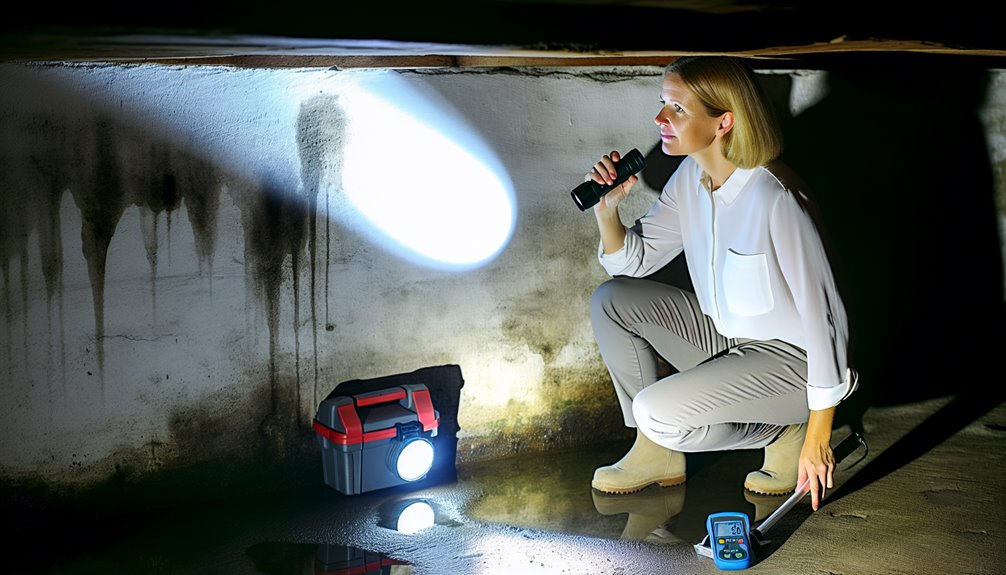
When you conduct a basement waterproofing inspection, the primary purpose is to identify potential water damage and guarantee the structural integrity of your home.
An effective inspection checklist will help you assess critical areas such as cracks, joints, and signs of moisture intrusion. By detecting issues early, you can prevent costly damage and protect your foundation. Additionally, you'll evaluate structural supports to verify stability and safety. This process also aids in preventing mold growth and other moisture-related problems, ultimately enhancing your home's value. Regular inspections can help ensure structural integrity by identifying potential water issues before they escalate.
The waterproofing benefits extend to improved energy efficiency and comfort, especially during rainy seasons.
Initial Assessment Process
After establishing the importance of identifying potential water issues, the initial evaluation process begins with a thorough visual examination of the home's foundation.
You'll conduct an interior inspection, examining walls, floors, and ceilings for cracks, gaps, and signs of water damage like stains and dampness. Don't overlook the furnace room, even if the rest of the basement is finished.
Next, perform an exterior inspection, reviewing landscaping for drainage issues that may direct water toward the foundation.
Utilizing advanced tools like moisture meters and infrared cameras will help you pinpoint hidden leaks and moisture levels. This all-encompassing approach enables you to identify potential entry points and evaluate the efficiency of current drainage systems, laying the groundwork for effective waterproofing solutions.
Examining Moisture Levels

How can you effectively assess moisture levels in your basement? Start by identifying potential moisture sources through simple tests, like the aluminum foil test. Seal a piece of foil against a wall and wait 24 hours; water droplets on the back indicate wall moisture.
For precise measurements, use moisture meters, which can detect moisture in various materials, revealing hidden issues needing attention. Infrared cameras offer advanced detection methods, identifying temperature variations and unseen moisture locations.
Additionally, monitor humidity levels with hygrometers, aiming to keep them below 60% to prevent mold and structural damage. Regular checks, especially after heavy rains, help maintain a healthy environment and address moisture problems proactively.
Identifying Signs of Damage
Identifying signs of damage in your basement is essential for maintaining its structural integrity and preventing costly repairs.
Start with crack analysis; look for visible cracks in walls or floors, which may indicate hydrostatic pressure or foundation issues.
Buckling surfaces signal significant structural stress, while crumbling concrete often results from water leakage.
Pay attention to moisture detection; water stains and damp spots reveal past or present water intrusion.
Notice any musty odors or visible mold, as they indicate excessive moisture.
Additionally, check for peeling paint and efflorescence, which suggest ongoing water issues.
Evaluating Drainage Systems
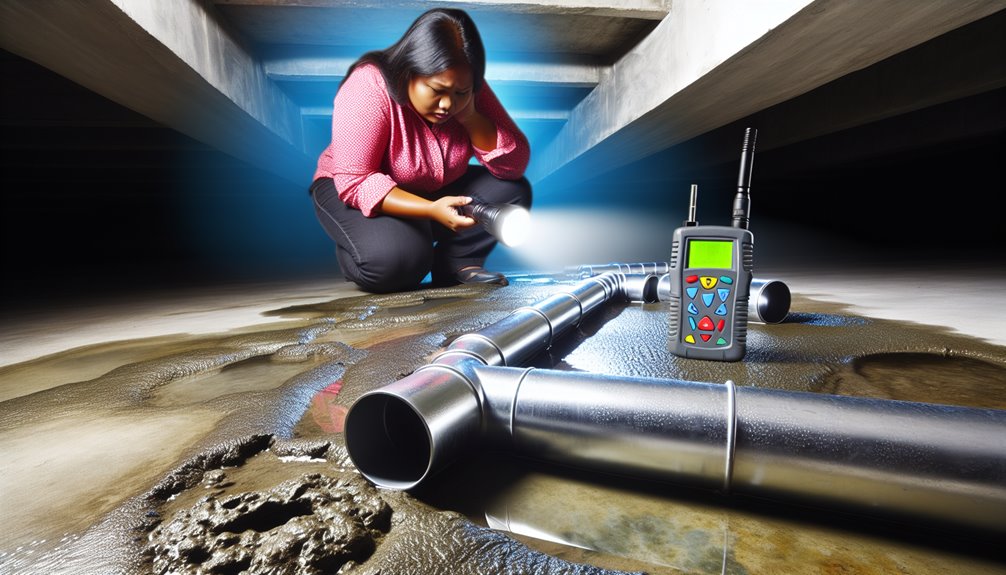
Addressing signs of damage in your basement naturally leads to examining the effectiveness of your drainage systems.
Start by inspecting drainage pipes for clogs or leaks that may impede proper water flow. Check sump pumps for functionality and maintenance, verifying they integrate seamlessly with your drainage installation.
Wall and floor joints require careful examination to catch any potential seepage. Assess the materials and design of the drainage system, favoring proven, non-clogging solutions.
Evaluate whether the system is interior or exterior, and confirm the correct placement of pipes routing to the sump pump.
Finally, verify that outdoor grading and gutter maintenance are adequate to prevent water accumulation around your foundation, safeguarding against future issues.
Recommendations and Solutions
While evaluating your basement for water intrusion, it's crucial to implement effective waterproofing solutions tailored to your specific issues.
Start by identifying cracks in foundation walls and poorly sealed joints, which can be sealed using epoxy or polyurethane. Consider installing drainage channels or grates to direct water away from your home.
Utilizing sump pumps and backup systems can effectively remove excess water, while moisture barriers, such as waterproof coatings or membranes, can prevent further damage.
Regular maintenance of gutters and improving yard grading are imperative preventative measures.
Finally, monitor for new water intrusion signs to guarantee your efforts remain effective.
Understanding the Report
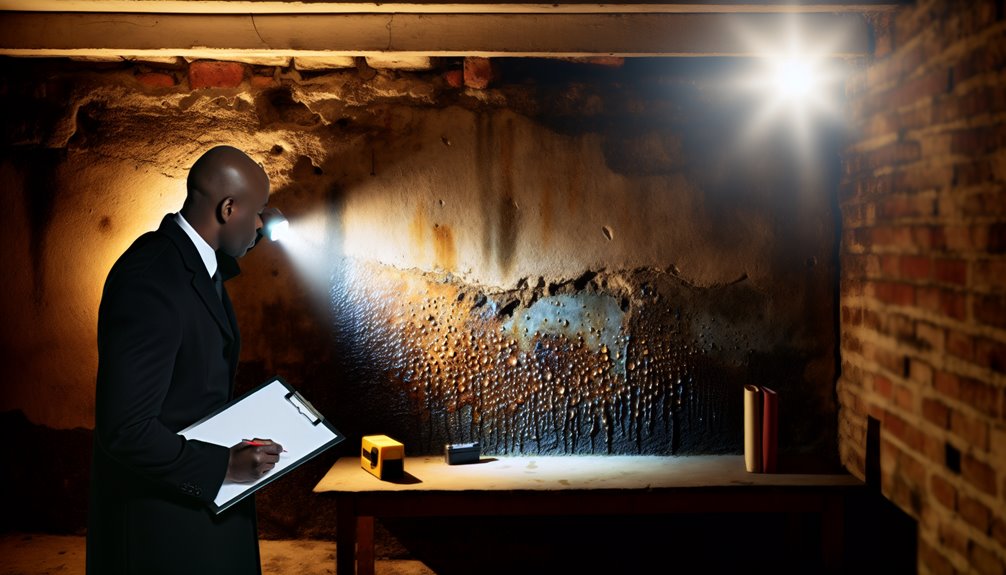
Understanding the inspection report is vital for homeowners aiming to safeguard their basements from water intrusion. This document provides important report clarity regarding the condition of your basement and the significance of the findings.
You'll find detailed descriptions of observed issues, severity assessments, and photographic evidence, all aimed at helping you comprehend the extent of any problems. Pay particular attention to recommendations for immediate actions and long-term maintenance strategies.
The report will also outline the functionality of drainage systems and any plumbing or electrical concerns that may affect your home. By reviewing this information thoroughly, you can make informed decisions to protect your basement and guarantee a safe, dry environment.
Don't hesitate to seek clarification on any points you find unclear.
Conclusion
In summary, a basement waterproofing inspection is crucial for maintaining your home's integrity and preventing future damage. By understanding the inspection process, you can be better prepared to address any issues that arise. With the right recommendations and solutions, you can protect your investment effectively. So, isn't it reassuring to know that a thorough assessment can help safeguard your home from potential water damage? Stay proactive and make sure your basement remains dry and secure.
If you're looking for more information on basement waterproofing, I invite you to visit Eco Pro Restoration at ecoprorestoration.com. You can also give them a call at (410) 645-0274. Their friendly team is ready to help you understand your options and ensure your home stays safe and dry. Don't hesitate to reach out!