
You might not think much about your basement, but if you've noticed musty odors or damp walls, it's time to pay attention. These signs often indicate deeper moisture issues that could lead to serious problems like mold growth and structural damage. Cracks in your foundation can worsen the situation, compromising your home's integrity. Ignoring these warning signals could cost you more in the long run, but understanding how to address them effectively is key. What steps should you consider to guarantee your basement remains dry and safe?
Musty Odors and Mildew

When you notice musty odors in your basement, it's often a clear indicator of underlying moisture issues that could lead to mold and mildew growth.
These fungi thrive in moist, warm, and dark environments, particularly in basements. Moisture can seep in through microscopic cracks in concrete walls or through direct seepage, creating ideal conditions for mold to flourish. High humidity levels in basements create an environment that exacerbates mold growth, making it crucial to address the moisture promptly.
To address this, mold removal is essential, as the presence of mold can cause health problems, including respiratory issues.
To prevent these odors, consider using dehumidifiers to lower humidity levels and regularly inspect your basement for any signs of moisture.
Additionally, waterproofing your basement can help mitigate future issues, ensuring a healthier environment for you and your loved ones.
Visible Water Stains
Musty odors and mildew aren't the only signs of moisture problems in your home; visible water stains on walls demand your attention as well.
These stains can indicate serious issues, such as high water tables, drainage problems, or cracks in your foundation. When water seeps through these cracks, it travels down the wall, leaving unsightly stains and increasing the potential for mold growth. Additionally, high groundwater levels can contribute to the moisture, making it essential to address the problem promptly.
Poor gutter maintenance and landscaping that directs water toward your foundation can exacerbate the issue.
To address these concerns, consider implementing effective waterproofing solutions. By identifying the source of the water and taking preventive measures, you can protect your home from further damage and guarantee long-lasting stain prevention.
Don't ignore those stains; they're calling for help!
Damp or Wet Walls
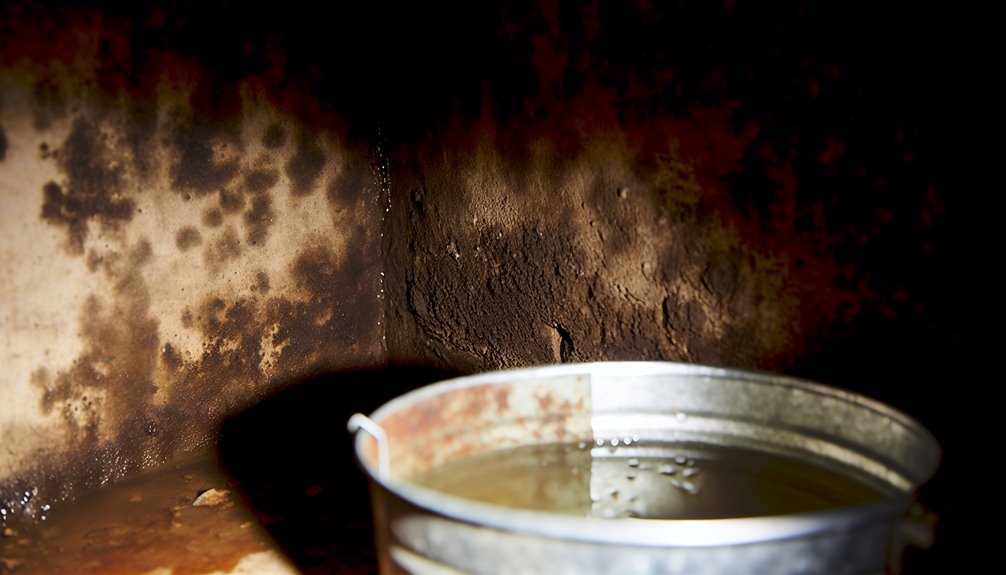
If you notice damp or wet walls in your home, it's vital to address the situation promptly to prevent further damage.
Dampness often arises from condensation causes, particularly when warm air meets cool basement walls. This can lead to moisture accumulation, especially on uninsulated pipes.
Interior moisture sources, like unvented dryers or steam from kitchens and bathrooms, exacerbate the problem, creating a perfect environment for mold growth. High humidity levels and improper ventilation further contribute to the issue, making it imperative to guarantee proper air circulation.
Signs such as peeling paint, efflorescence, or a musty smell indicate significant moisture problems that require immediate attention.
Don't neglect these warning signs—protect your home by seeking effective waterproofing solutions.
Cracks in the Foundation
Damp or wet walls often point to underlying issues that may extend to the foundation of your home. Cracks in the foundation can arise from settling, shrinkage, or ground movement, leading to serious structural concerns.
During a foundation inspection, you may notice various crack types, such as vertical, horizontal, or stair-step, each indicating different causes and severity levels. Ignoring these cracks can result in water intrusion, pest issues, and increased maintenance costs.
Timely crack repair is vital to prevent further damage and guarantee your home remains safe and structurally sound. Utilizing methods like polyurethane foam or epoxy injection can effectively address these cracks, safeguarding your investment and promoting a healthier living environment.
Mold Growth and Infestation

How can you tell if your home is becoming a breeding ground for mold? Mold thrives in dark, damp environments, particularly in basements, where temperatures range from 60 to 80 degrees Fahrenheit.
If you notice a musty smell, visible water damage, or unexplained high water bills, it's vital to act quickly. Mold spores can spread rapidly, posing significant health risks, including allergic reactions and respiratory issues.
Look out for symptoms like itchy eyes and throat, which may indicate mold exposure. Address any plumbing leaks, improve ventilation, and clean up moisture immediately to combat mold growth.
Conclusion
Don't let your basement become a breeding ground for mold and a sanctuary for moisture! If you ignore the warning signs, you could be inviting a relentless army of damaging water and toxic mold into your home. Act now to reclaim your space—seal those cracks, eliminate musty odors, and banish water stains. With effective waterproofing solutions, you'll transform your basement from a damp dungeon into a dry, safe haven. Protect your home before it's too late!
If you're feeling overwhelmed or unsure about where to start, I invite you to visit Eco Pro Restoration at ecoprorestoration.com. There, you'll find a wealth of information and resources to help you on your waterproofing journey. You can also call us at (410) 645-0274; we're here to answer any questions you might have and guide you every step of the way. Let's work together to create a safe and dry space in your home!